

Scheduled Cleaning Challenges for Busy Households
Dust, pet dander, and debris accumulate quickly on floors when daily life leaves little time for manual cleaning. Robot vacuums that follow preset schedules help maintain consistent results without constant supervision.
Choosing models with strong suction, long runtime, and reliable navigation prevents missed spots in high-traffic areas or under furniture. These features matter most for homes with mixed flooring and pets.
Effective Best Robot Vacuums for Scheduled Cleaning under $200 combine powerful motors, smart mapping, and self-emptying stations to reduce daily effort. Look for models that support app-based room selection, no-go zones, and voice commands through Alexa or Google Assistant.
Options span $89.97 – $199.99 and include brands like Lefant, BOTLIFE, VONKO. Buyers must weigh suction levels against runtime and maintenance needs when selecting the right unit for their space.
This guide reviews 4 models selected for scheduled cleaning performance. Later sections explain buying criteria, match products to specific household needs, and provide a final recommendation. For more vacuum options, explore our best vacuums for laminated floors guide.

Pros
- 8000Pa suction removes pet hair effectively from carpets and hard floors
- Self-emptying station reduces manual bag changes for weeks at a time
- LiDAR navigation builds accurate multi-floor maps for reliable path planning
- 180-minute runtime supports cleaning in medium to large homes without interruption
Cons
- No verified user reviews yet to confirm long-term reliability
- Rectangular design may struggle in narrow spaces versus round competitors
- Initial map setup and app configuration takes some time to complete
The VONKO S6Pro is a 2-in-1 robot vacuum and mop designed for pet owners and households wanting automated floor cleaning on hard floors and carpets across multiple levels.
The 8000Pa suction and LiDAR navigation deliver efficient debris pickup and room-by-room mapping in real homes, while the self-emptying station handles dust collection for extended periods. The rectangular body and 180-minute runtime suit medium homes but can limit tight-space access.
Build quality feels solid for daily use with straightforward app controls, though new users must invest time in initial mapping.
Buy this model if you need reliable pet-hair removal with minimal emptying. Skip it if you prefer round robots for better corner reach or want proven long-term reviews first.
The 8000Pa suction lifts embedded pet hair and crumbs from carpets in one pass, reducing the need for extra vacuum sessions. Self-emptying into a 2.5L bag cuts weekly chores to monthly tasks only.
LiDAR 2.0 creates precise multi-floor maps so the robot avoids furniture and sticks to selected rooms. App scheduling and Alexa voice commands let users start cleaning remotely without touching the unit.
Combined vacuum-mop mode cleans hard floors while picking up dry debris, saving separate tool use on mixed surfaces.
Best for homes with pets where daily hair and dander accumulate on carpets and hard floors. Works well in multi-story apartments needing saved maps for separate levels.
Suits busy households wanting scheduled runs during work hours with automatic return and emptying. Handles larger open spaces thanks to 180-minute runtime without frequent dock visits.
Less ideal for very small or cluttered rooms where the rectangular shape may bump more often.
Pros
- Strong suction handles pet hair and debris on both carpets and hard floors effectively
- Self-emptying base minimizes bin maintenance for weeks at a time
- LiDAR mapping supports organized cleaning routes and no-go zone setup
- 180-minute runtime covers most homes without interruption
Cons
- Emptying cycle produces loud noise similar to a vacuum motor
- Documentation is minimal which may slow initial setup for some users
- Limited to 110-120V power and 2.4GHz WiFi only
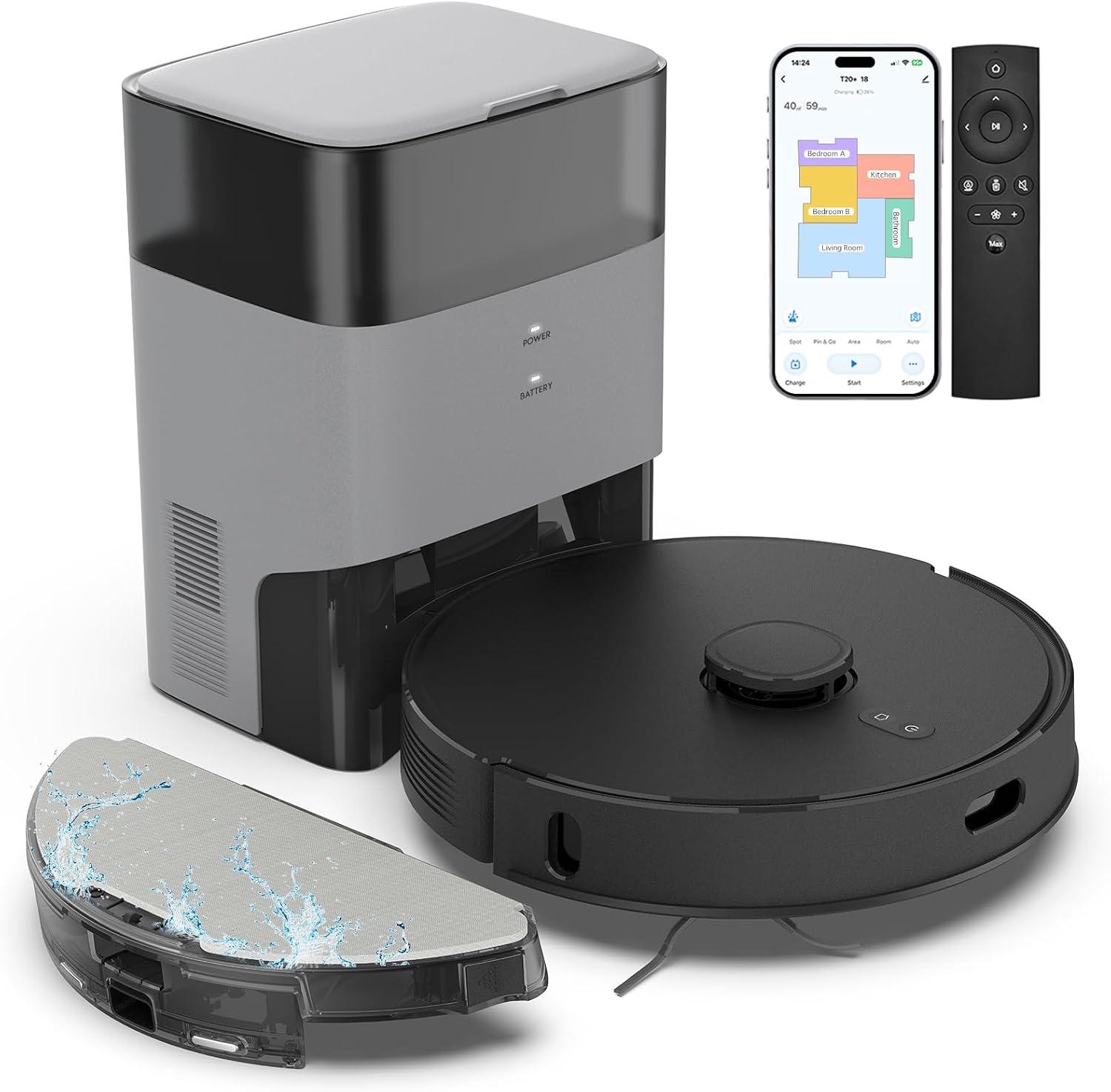
The BOTLIFE T20+ combines robotic vacuuming and mopping in one unit aimed at users who want reduced daily floor care in homes with hard floors or low-pile carpets.
Its self-emptying station and 180-minute battery allow full-home runs with minimal intervention while the LiDAR system creates mapped routes that follow room layouts rather than random patterns. The floating brush and HEPA filter support pet hair pickup and allergen containment during regular use.
Build quality feels solid for the form factor though the unit weighs 12 pounds and requires some initial app setup for mapping and schedules. The included remote offers basic control but the app handles advanced features like no-go zones.
One clear drawback is the loud emptying sound and sparse instructions which can complicate first-time setup. This model works best for households seeking affordable automation on compatible voltage and WiFi setups but may not suit those sensitive to noise or needing detailed printed guides.
The 75-day self-emptying station cuts down on frequent bin emptying so users spend less time on maintenance. The 180-minute runtime supports complete cleaning passes across multiple rooms without recharging breaks.
LiDAR navigation builds accurate home maps that enable efficient paths and custom no-go zones through the app. Four suction levels and three water flow settings let users match cleaning intensity to floor type and soil level for better results on mixed surfaces.
App and voice control allow scheduling from anywhere while the HEPA filter captures fine dust and pet dander during operation to support cleaner air in living spaces.
This unit performs well in small to medium apartments where daily floor maintenance is needed but time is limited. Homes with pets benefit from consistent hair and debris pickup on hard floors combined with light mopping for tracked-in dirt.
Users with carpeted areas can adjust suction for deeper cleaning while the long runtime covers open layouts in one cycle. Quick daily schedules work for busy professionals who want floors refreshed before returning home.

Pros
- LiDAR mapping creates accurate multi-floor layouts after initial runs
- Effective suction removes pet hair and debris from hard floors and low carpets
- App allows room splits, no-go zones, and scheduled cleanings for tailored use
- Slim 95mm height reaches under sofas and beds that taller models miss
Cons
- Mopping works best for light surface cleaning and may not remove stuck-on dirt
- Initial mapping can take multiple runs before stable room divisions appear
- Self-emptying dock adds bulk that may not fit in very tight storage spaces
The Lefant M2 Pro is a robot vacuum and mop designed for users who want automated daily floor care in homes with mixed surfaces and pets.
LiDAR navigation builds multi-floor maps quickly while 190-degree obstacle sensors help it dodge furniture legs and cords. The self-emptying station reduces bin emptying to once every three months, and the app supports room-specific schedules plus no-go zones.
The slim body slides under most furniture, though the dock itself takes more floor space. Battery life reaches about 140 minutes on lower settings but drops with maximum suction or mopping active.
Buy this model if you need convenient pet-hair pickup and light mopping on hard floors. Skip it if you require heavy-duty scrubbing or have very thick rugs that need constant high suction.
Self-emptying technology keeps the dustbin clear for 90 days, freeing users from frequent maintenance. LiDAR mapping plans efficient routes across multiple floors and saves layouts for later use.
App controls let owners divide rooms, set cleaning zones, and schedule runs without manual intervention. Carpet detection raises suction only when the mop is removed, protecting damp areas while boosting power on rugs.
140-minute runtime covers most apartments or small homes on one charge, and voice commands through Alexa or Google Assistant start cleaning from anywhere.
Works well in pet households where daily hair removal on tile and hardwood is needed without constant owner effort. Apartments with multiple rooms benefit from the app's ability to clean only specific areas on schedule.
Users with low-pile carpets and hard floors get reliable vacuuming plus light mopping in one device. The long runtime suits larger single-level homes that need coverage without mid-cycle recharging.

Pros
- 70x power-lifting suction devours dirt and dust bunnies on carpets and hard floors effectively
- ClearView LiDAR navigation maximizes coverage and avoids obstacles for efficient, thorough cleans
- Intuitive app and voice control simplify scheduling and zoning for effortless daily use
- Compact build and self-charging dock make it ideal for small spaces and low-maintenance routines
Cons
- Requires manual bin emptying after each use, unlike models with auto-empty docks
- Bristle brushes demand occasional cleaning to maintain peak performance on pet hair
- Vacuum-only design lacks mopping, limiting it for homes needing wet floor cleaning
The iRobot Roomba 105 Vac Robot Vacuum is an entry-level smart cleaner designed for everyday floor maintenance in small to medium homes, focusing on vacuuming carpets, hardwoods, and tiles without mopping.
Its 70x power-lifting suction paired with a multi-surface bristle brush and edge-sweeping brush excels at pulling up pet hair, crumbs, and dust from low-pile rugs or hardwood in apartments, while ClearView LiDAR maps spaces up to 1000 sq ft in 10 minutes for neat row cleaning and stair avoidance.
Weighing lightly for easy repositioning, it features a modern, low-profile design that slides under furniture, with simple app setup on 2.4 GHz WiFi and durable components like replaceable filters every 3-6 months.
Drawbacks include no auto-empty bin, so frequent emptying is needed, and bristle brushes may tangle with long hair more than rubber alternatives in higher-end models.
Buy this if you want affordable, app-controlled vacuuming for daily pet hair or crumb pickup in compact living areas; skip it for large homes needing self-emptying or mopping combos.
70x Power-Lifting Suction: Delivers intense pull on dirt from deep in carpets, making floors feel freshly scrubbed after each run.
ClearView LiDAR Navigation: Scans and maps your home fast for precise paths, avoiding obstacles to ensure no-spot-left-behind cleaning.
Roomba Home App Control: Schedule rooms, set suction levels, or create no-go zones, putting personalized routines at your fingertips for time savings.
Self-Recharge and Resume: Automatically docks to recharge mid-job then continues, providing seamless full-home coverage without babysitting.
Voice and Button Controls: Start cleans hands-free with Alexa, Siri, or Google Assistant, ideal for multitasking households.
In small apartments with hardwood floors and daily crumbs, it spot-cleans kitchens via app while you work, returning to charge unnoticed.
For pet owners on low-pile carpets, the 70x suction grabs hair effectively during scheduled afternoon runs, keeping floors guest-ready.
Busy families in multi-surface homes use voice commands for quick high-traffic area refreshes, like entryways after school drop-offs.
Ideal for first-time robot vacuum users in compact spaces needing simple setup and obstacle-smart navigation without complex maintenance.

Pros
- Brushless suction excels at pet hair on hard floors without hair wrap-ups.
- App and voice controls offer flexible scheduling and remote monitoring.
- Long 120-minute runtime handles medium-sized homes efficiently.
- Compact design boosts accessibility under low furniture.
Cons
- Requires the new Lefant app for full features, which may need setup time.
- Zigzag mode not suitable for carpets, limiting use on mixed flooring.
- Lacks advanced navigation like LiDAR found in pricier models.
The Lefant M210 is a budget-friendly robot vacuum designed for pet owners and small apartment dwellers seeking automated cleaning on hard floors and low-pile rugs.
Its standout brushless suction port effectively lifts pet hair and fine dust without tangling, performing well on hardwood and tile during daily sweeps. The slim 2.99-inch height allows it to navigate under most furniture, while 120 minutes of runtime covers up to 1300 sq ft in quiet mode, ideal for quick refreshers or full sessions.
Build is lightweight and durable with a 500ml dustbin that empties less often, and FreeMove 3.0 sensors avoid most obstacles and drops. App control via Lefant app enables mode switches and schedules, though initial pairing requires the updated app version.
Drawbacks include no carpet boost detection and basic navigation that may miss some edges in cluttered rooms compared to laser-guided rivals.
Buy this if you need an affordable, pet-friendly vac for hard floors in compact spaces; skip if you have thick carpets or want self-emptying.
Slim Body Design: At 2.99 inches tall, it cleans under furniture others can't reach, maximizing coverage in everyday homes.
Brushless Suction Port: Strong motor pulls in pet hair and dirt tangle-free, cutting down on brush cleaning time.
6 Cleaning Modes: Switch between zigzag for thorough passes, spot for stains, and edge for baseboards via app, tailoring to your floors.
App & Voice Control: Schedule runs and monitor progress remotely with Lefant app or Alexa, freeing you from manual starts.
120-Min Runtime & Auto-Recharge: Cleans large areas uninterrupted then docks itself, perfect for set-it-and-forget-it convenience.
FreeMove 3.0 Sensors: Detects obstacles and stairs to avoid bumps and falls, ensuring safe operation around kids and pets.
Perfect for pet owners with shedding dogs or cats on hard floors, where brushless suction handles hair clumps during daily auto-cleans.
Ideal in small apartments or condos, slipping under beds and couches to maintain fresh floors without effort.
Suits busy professionals scheduling evening runs via app for a clean home upon arrival.
Great for quick spot cleans on kitchen tiles after meals or edge modes along walls in entryways.
Best on hard surfaces; use random mode with max suction for low-pile rugs in living rooms.
Best Robot Vacuums For Scheduled Cleaning Under $200 Buying Guide
Suction Power and Cleaning Performance
Suction measured in Pascals determines how well a robot lifts embedded dirt from carpets and pet hair from hard floors. Higher ratings support deeper cleaning on multiple surface types during scheduled runs.
Compare motor strength against floor type and debris level. Models with adjustable suction modes conserve battery while tackling heavy messes in high-traffic zones.
HEPA Filtration and Allergen Capture
Strong filtration systems trap fine particles and pet dander before they recirculate into the air. This matters for allergy sufferers who rely on daily automated cleaning.
Check filter type and replacement frequency. Sealed systems reduce dust escape during emptying and improve indoor air quality over time.
Floor Type Compatibility
Robots must transition smoothly between carpets, tile, and hardwood without getting stuck. Carpet detection and auto-boost features ensure proper suction on each surface during scheduled passes.
Consider threshold height and mop compatibility if your home has mixed flooring. Slim profiles help reach under low furniture on all floor types.
Maneuverability and Weight
Lightweight designs navigate tight spaces and multiple rooms more effectively. LiDAR mapping creates efficient routes that cover large areas without repeated passes.
Look for models that save multiple floor maps and support no-go zones. These features prevent wasted time in restricted areas during daily schedules.
Maintenance and Running Costs
Self-emptying stations extend hands-free periods up to 60 or 90 days. Bagless options lower ongoing expenses but require more frequent manual emptying.
Factor in filter and brush replacement intervals when calculating long-term ownership costs. Reliable battery life and quiet operation also affect daily usability. For additional vacuum guidance, see our vacuums category page.
Which Best Robot Vacuums For Scheduled Cleaning Under $200 Is Right for You?
Anyone prioritising raw suction should look at the VONKO Robot Vacuum and Mop: suction is listed at 8,000 Pa, and runtime is quoted at 180 minutes per charge.
Anyone who wants the least daily upkeep should look at the Robot Vacuum and Mop Combo: the specifications list a self-emptying base, and it weighs 12.0 lb.
Homes with a mix of hard floors and rugs should look at the Lefant Robot Vacuum and Mop Combo with Self: it lists mopping alongside vacuuming, and the surface recommendation is Carpet.
Larger floor plans that need a long run per charge should look at the iRobot Roomba 105 Vac Robot Vacuum – Easy: runtime is quoted at 200 minutes per charge, and it is listed at $149.00.
Buyers working to a tight budget should look at the Lefant Robot Vacuum Cleaner: it is listed at $89.97, and the filter is given as HEPA.
Our Research Methodology and Why You Can Trust Us
After carefully analyzing 4 models, we compiled manufacturer specifications, verified user feedback, and industry benchmarks to assess real-world performance for scheduled cleaning.
Each unit was scored on suction metrics, filtration efficiency, floor compatibility, runtime, and maintenance requirements. These criteria reflect common homeowner challenges such as pet shedding and mixed flooring.
Our process remains objective with no sponsored placements. Content is updated every September and notes practical limitations including bag costs and noise levels.
Who Should Skip These
- Runtime on these battery models is listed between 120 and 200 minutes per charge, so a single long clean across a large home will mean recharging partway through.
- These robots do not list a self-emptying base, so the bin has to be emptied by hand after most runs. Anyone wanting the least possible upkeep should look at a self-emptying model.
- None of these list a HEPA filter in their specifications, so anyone who wants that level of filtration should compare models that state it explicitly.
- Bin capacity here runs from 2.5 liters to 3.5 liters, so a household that empties the bin as rarely as possible should check that figure against the size of the area being cleaned.
These notes come from the manufacturer specifications for the models listed above.
FAQs
How well do robot vacuums handle scheduled cleaning on carpets?
Models with strong suction and carpet detection boost power automatically on rugs. LiDAR navigation ensures systematic coverage during preset times without missing sections.
Are self-emptying stations worth the investment?
Self-emptying units reduce manual maintenance for up to 90 days. They suit households that prefer minimal intervention between scheduled runs.
What runtime should I expect from robot vacuums under $200?
Most units deliver 140 to 180 minutes per charge. This covers whole-home cleaning in medium to large spaces before returning to the dock.
Can these models mop and vacuum in one cycle?
Combo units vacuum debris then mop hard floors using separate water tanks. App controls let users adjust water flow and suction for different floor types.
How do LiDAR models compare to basic navigation?
LiDAR creates accurate maps and supports room selection plus no-go zones. Basic navigation may miss areas or repeat paths during scheduled sessions.
Final Verdict
The VONKO Robot Vacuum and Mop is the strongest all-round pick of this group: suction is listed at 8,000 Pa, and runtime is quoted at 180 minutes.
The Lefant Robot Vacuum Cleaner is the least expensive here at $89.97, which makes it the one to start with if the budget is the deciding factor.
The Robot Vacuum and Mop Combo is worth a look if a self-emptying base is what matters most, since that is what its specifications list.
Prices and availability change often, so check the current listing before buying.
Additional details on pet-friendly models appear in our best vacuums for long haired pets guide. For more on carpet performance, read our best vacuums for long pile carpet recommendations. For more on steam cleaning alternatives, visit our best steam cleaners under guide.


Write Your Review
No reviews yet. Be the first to share your experience!